Anybody can produce amazing beats, but what separates you from the rest of the producers is your mix. It is very important that you constantly practice this skill as the greater the quality you have, the more your beats will attract artists online and would want to eventually work with you.
In this step by step guide I will share the techniques I personally use in order to get the best sound quality out of my beats.
Get Organized
Before we start the mixing process, It is helpful to get each sound from your channel rack onto its own mixer track. This will help you individually control each sound and stay organized.
In order to get every individual sound onto its own mixer track the fast way, go to your channel rack (F6 on keyboard) and click once on the neon green-outlined box beside your first pattern.
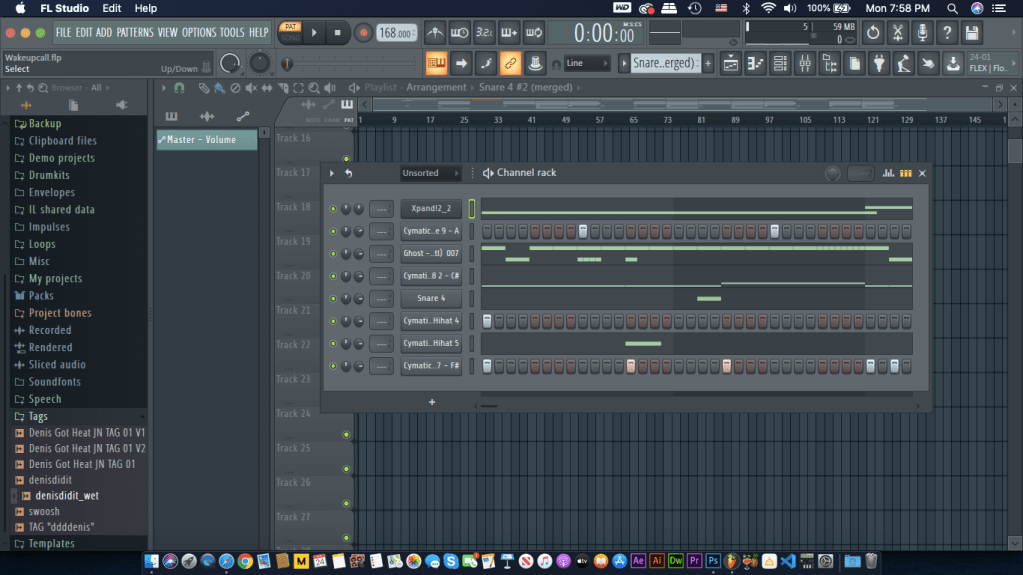
All of your patterns should be highlighted.
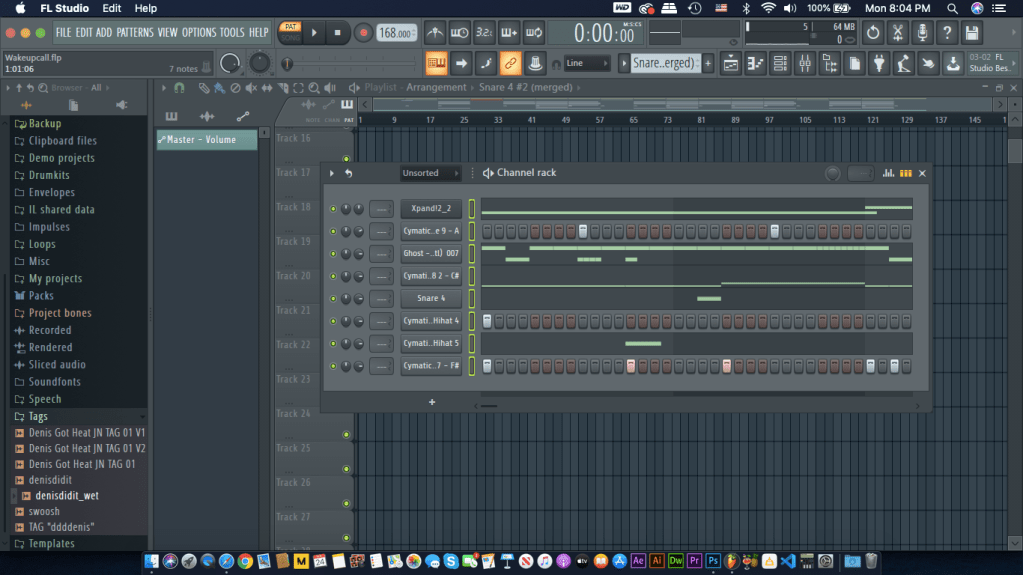
Switch over to your mixer panel (F9 on keyboard) to paste your patterns individually onto their own mixer track. Personally to stay organized, on the mixer panel I like to separate the drum elements from the melodic ones. With that in mind, I start pasting my drum elements starting on mixer track 5 and leaving mixer tracks 1-4 for melodic or fx elements.
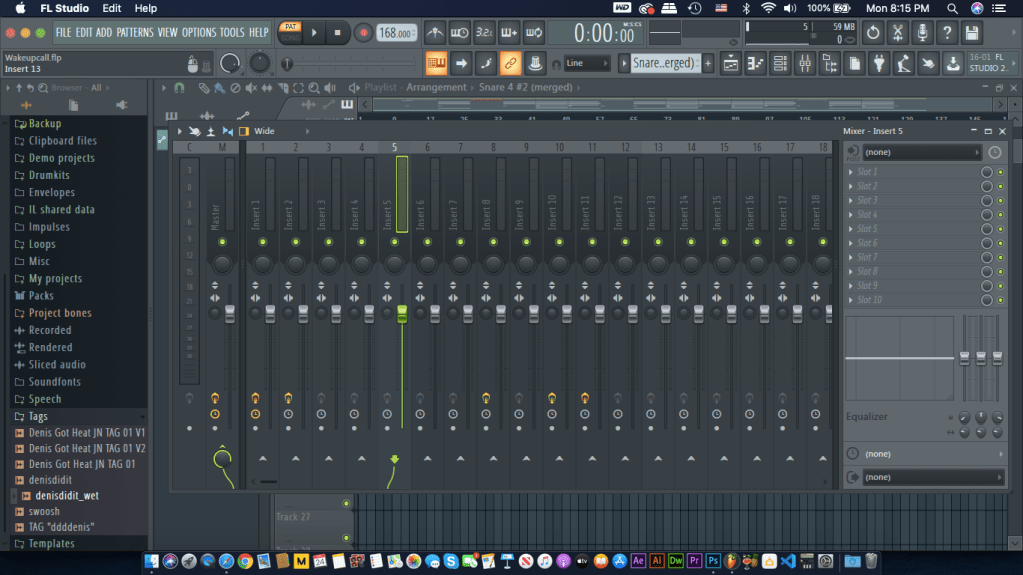
Starting on track 5, Right click on track 5, hover over ‘Channel Routing’ and click on ‘Route selected channels starting from this track’ or (SHIFT + CMND/CTRL + L)
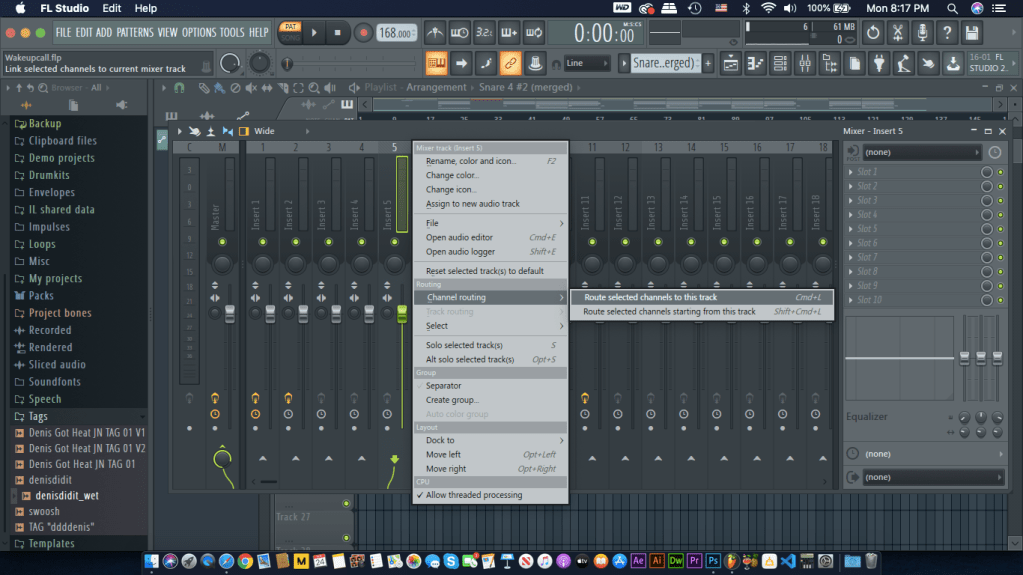
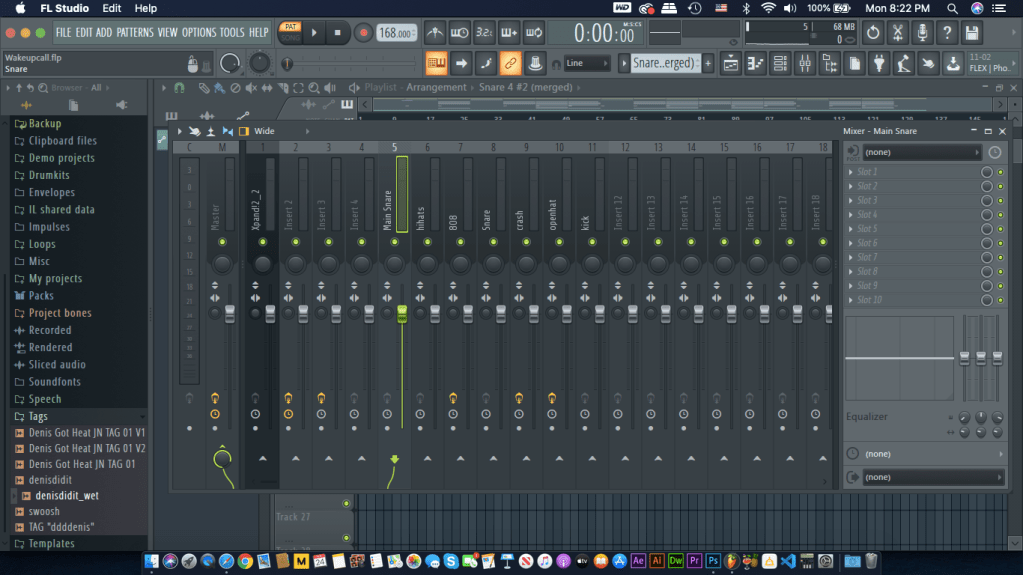
Your Mixer track should like the image below. I named each mixer track to the sound it correlates to, so it won’t be confusing later on. To name a mixer track, select a track and press F2 on your keyboard. Notice that track, “Xpand!2_2” is placed on mixer track 1. That is because “Xpand!2_2” is a melodic pattern or in this beat a guitar preset.
Getting rid of unwanted frequencies
Now that we got organization out of the way, let’s start on the actual mixing. Using Fl Studio’s own Equalizer (Parametric EQ 2) or any other equalizer at your disposal, go through each channel rack and get rid of harsh frequencies that collide with other sounds in your beat.
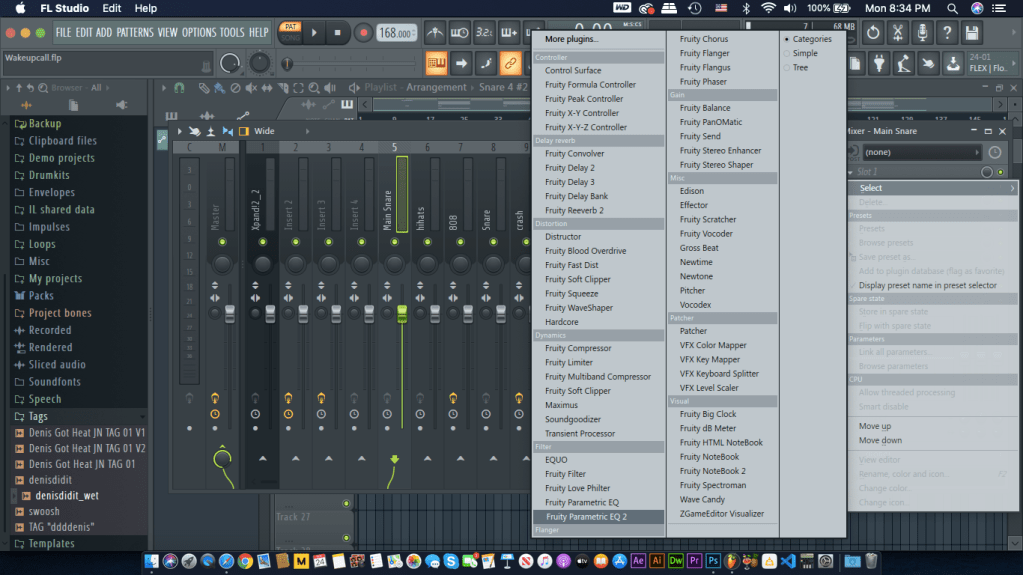
Open up The EQ by selecting the mixer track and opening up your plug-in list by clicking the drop down arrow on the track’s slots.
Eq-ing Snares or Claps
TIP: right click on the neon green dot below your tracks name to solo out that track and mute out the rest of the sounds to easily hear each sound.
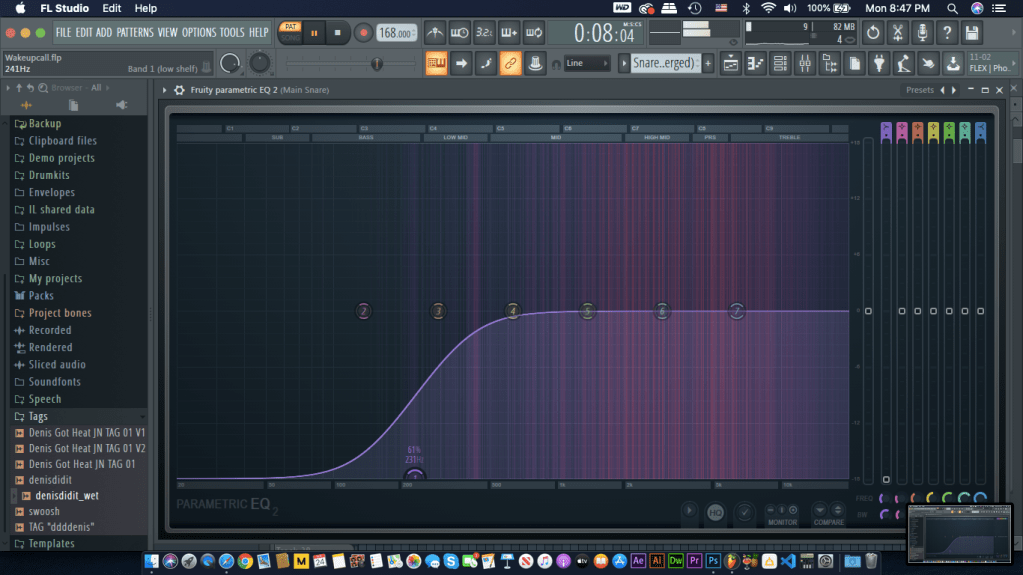
When I EQ my snares or claps I cut the low end of the sound to around 230hz. this cuts out any low-end that may collide with the bass while still maintaining the mid to high frequencies for the snare or clap to sound crisp.
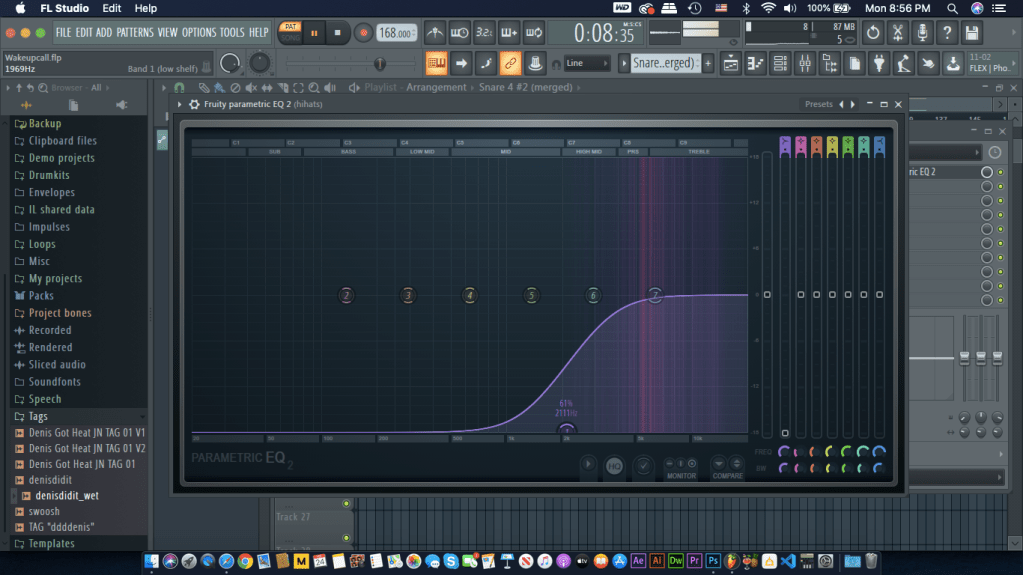
Eq-ing Hi-hats
EQ-ing the 808/Bass
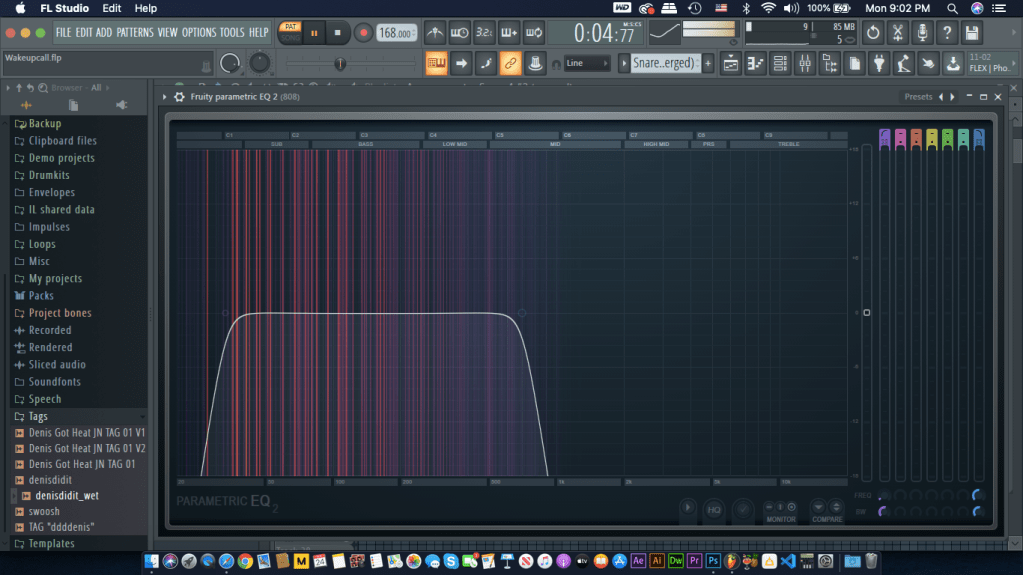
Now for the fun part, The 808’s. I start off by creating a highpass filter at around 30hz and a lowpass filter at 715hz.
EQ-ing Crash/Openhats
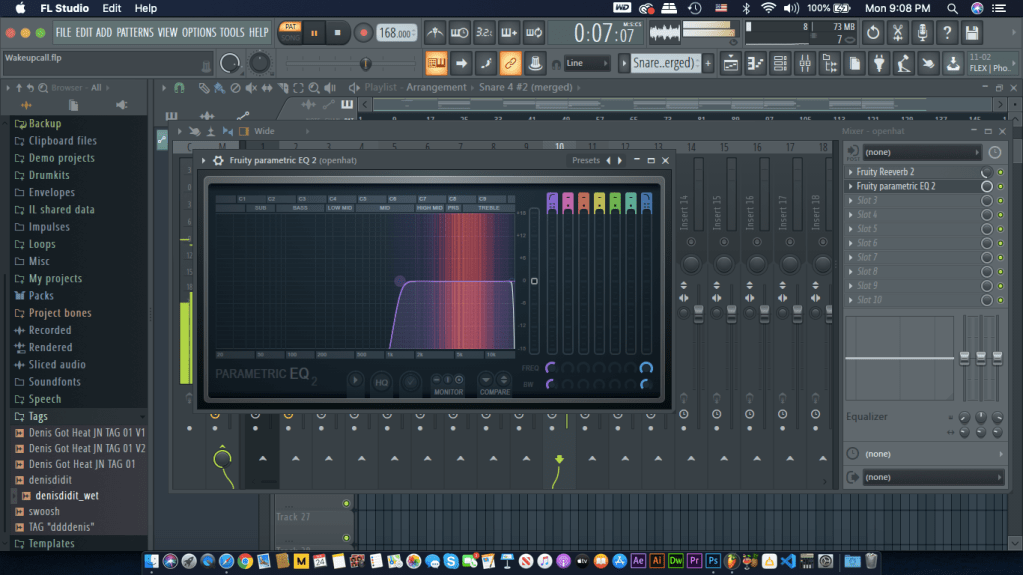
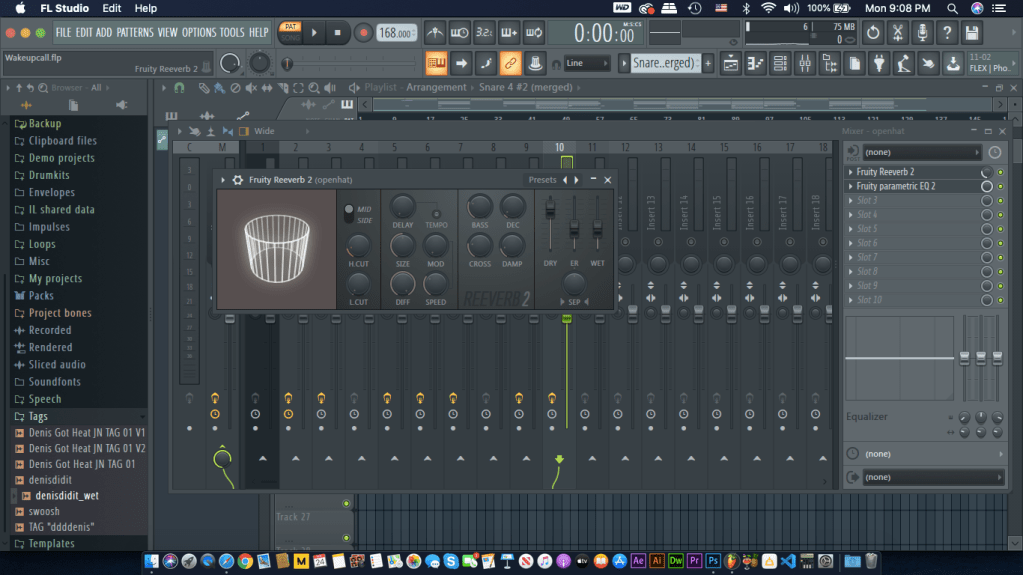
Since crashes and open hats have similar frequencies as the hi hats you can filter them the same way. A technique I use is to add a little of ambiance or reverb on the open hats and crashes to create depth in the drum pattern.
EQ-ing the Kick
Surprisingly, I do not Eq my kick. Why? Because I want to my kick to knock through the mix since these drum samples have a range of low and hi end frequencies. However, I do level the kick so it won’t peak over 0.0db.
EQ-ing the Melodies
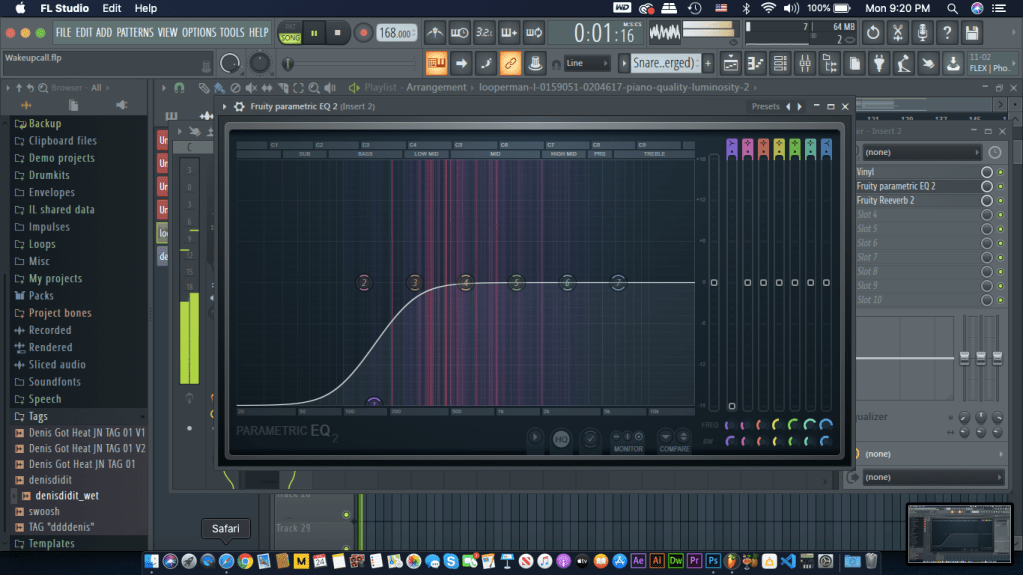
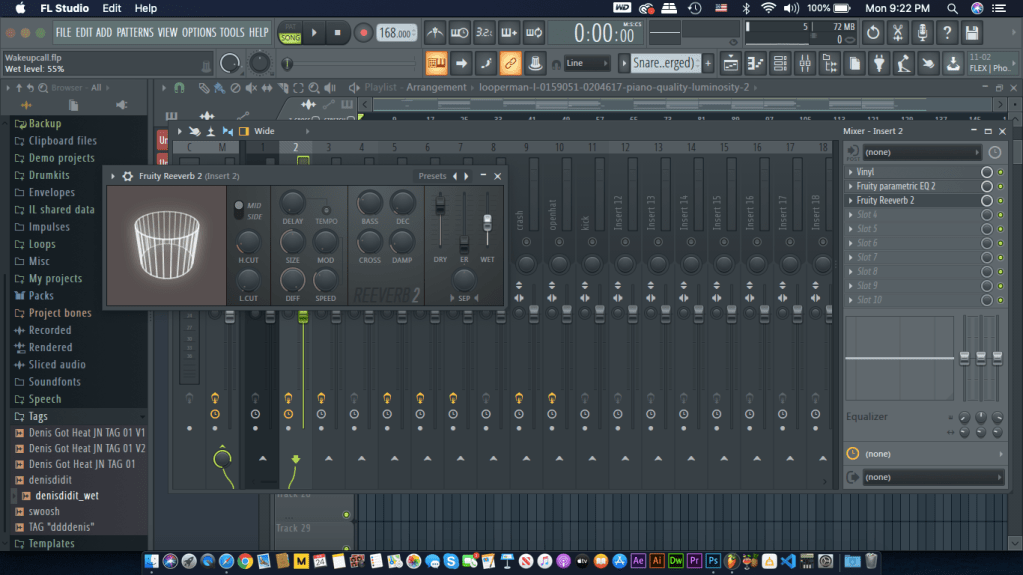
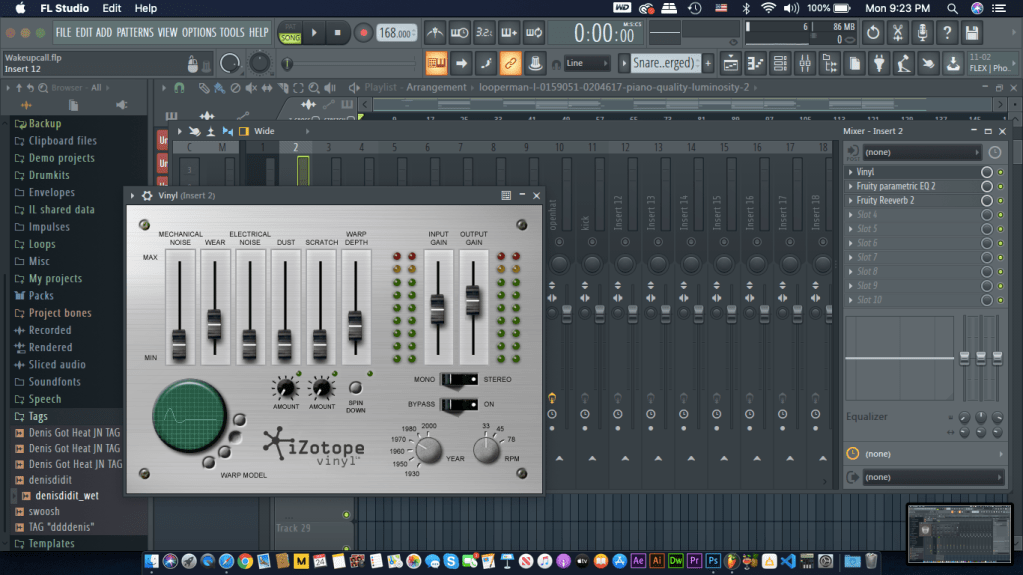
Another important element in music is the melody. In this beat I have a Piano sample and a Guitar pattern I created with a preset. EQ-ing melodies vary from sound however the idea is the same. You want the melodies to have little low end so it won’t collide with the bass. In this beat, the Piano has low-end and high frequencies. I filtered some of the low-end while still getting enough bass that won’t collide. I also add reverb to create more space in the track. The piano in this beat has an effect called vinyl which manipulates the sound to sounding old school/vintage creating a nice texture.
Leveling and Panning
Leveling is placing each sound at certain volume (Decibel/db) so the whole beat is balanced and no sound overpowers another or peaks over 0.0 db. Panning is what makes a sound come from the left or right in stereo. When mixing, keep in mind that you are technically creating a template for the artist to record on. Make room for the artist to lay their vocals by limiting the amount of sounds in the found in the middle of the mix. Typically the main vocals in a track sit in the middle of the song. Both of these techniques are important to the mix. It is what makes the beat sound good and cohesive.
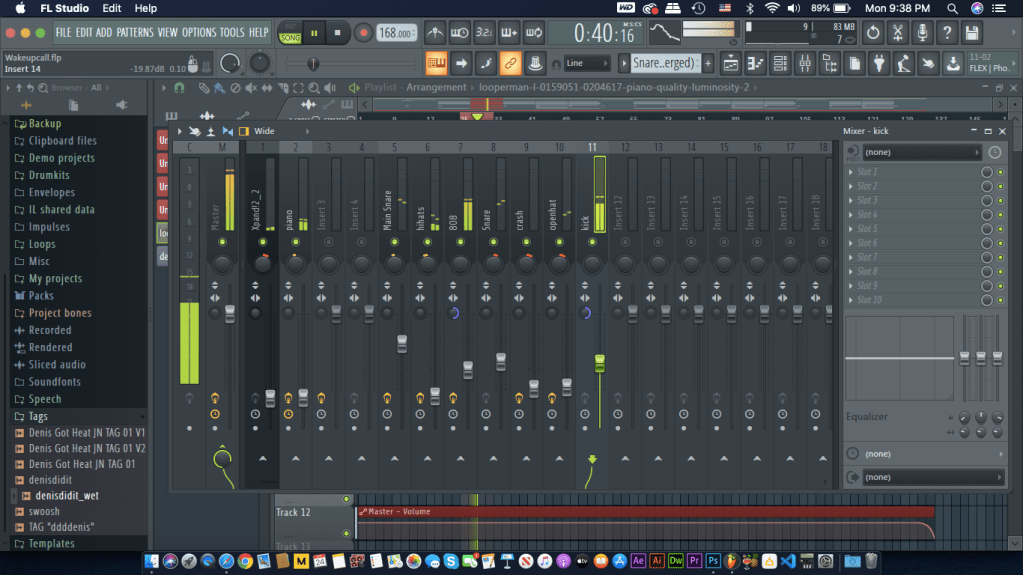
- Snare/Clap – -18db 10% left pan
- hi hats – -27db 15-20% pan
- accent snares or percussion – -18 to -21db either left or right pan 10-15%
- 808/bass – -18db keep middle of the mix
- openhats/crashes – -27 to -24db 20% right pan
- kick – -15db middle of mix
- melodies – -33 – 30db pan either left or right 10-15%
For this beat this is how the mixer panel looks like after the leveling, panning and EQing.
Make it sound louder!
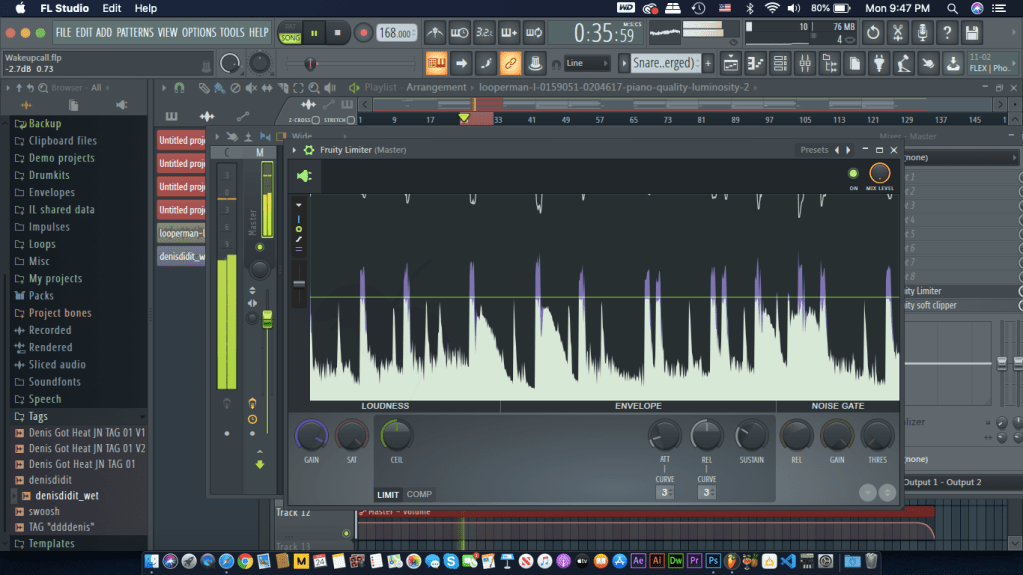
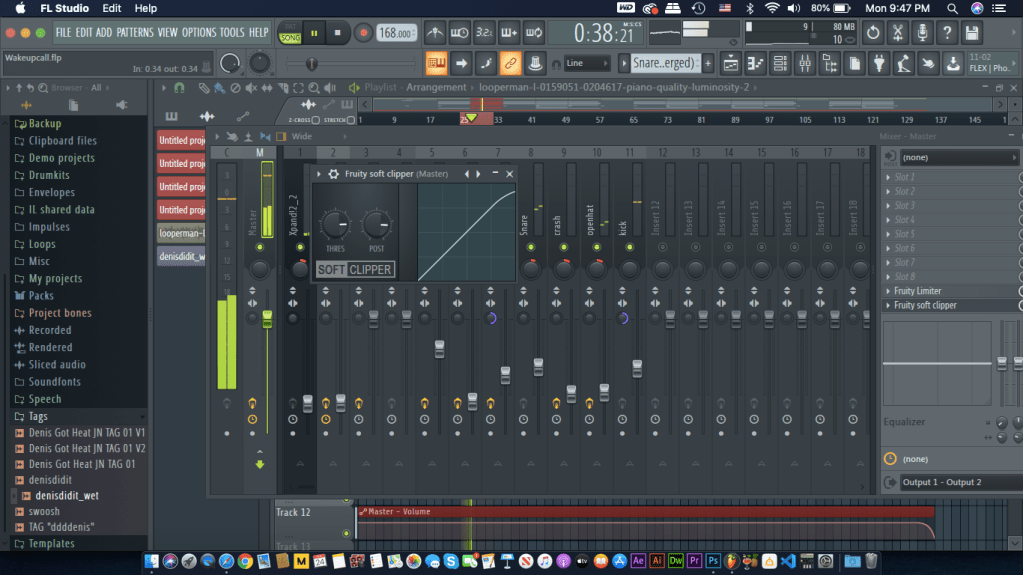
The final step in this mixing process is to make the whole beat sound loud and good. Head over to the MASTER track and open up “fruity limiter” Fruity limiter will help increase the volume in the overall track. Start by raising the purple gain knob by 15db and decreasing the green ceiling knob by -1db. This ensures the beat reaches its full potential volume without peaking past 0.0db. Next open up a soft clipper. This helps from maintaining all the individual sounds on the track stay below 0.0db.
Your beat is ready to be published sounding clean and crisp!
If you found this guide helpful, like and share this post and comment below any feedback! I will respond to any comments.
Listen to the beat mixed in this tutorial:
Wake up call (prod.Denisbeats) https://bsta.rs/59c7bb3a
 Let's Talk Music